Home Depot In-Store Standards Refresh
Associate Creative Director
Every design system eventually accumulates debt. Standards get bent for a vendor exception, then bent again for a seasonal initiative, then again for a new product category, and over time the system that was supposed to create consistency becomes the source of the inconsistency. That's where Home Depot's in-bay signage was when this project started. It also just didn't speak to how customers were shopping in the store anymore.
I worked alongside a Senior Art Director and occasionally our Creative Director. We didn't redesign from scratch. We went back to first principles and asked what a customer actually needs from a sign at the shelf level, and what they don't.
Nobody is reading a how-to guide off a sign. They're going to YouTube for that. So we stopped competing with YouTube and started doing the one thing a physical sign can do that a phone can't: intercept a customer at the moment of decision with exactly the information they need to take the next step.
The working title was Project Mercury. We built it in secret at first. We didn't want the powers that be to latch onto the idea and assign it to us formally, with all those check-ins and deadlines. We wanted to take our time, noodle over it at the "pub" (my kegerator), buy books on Swiss design, make it something we casually talked about and worked out at night before going to sleep.
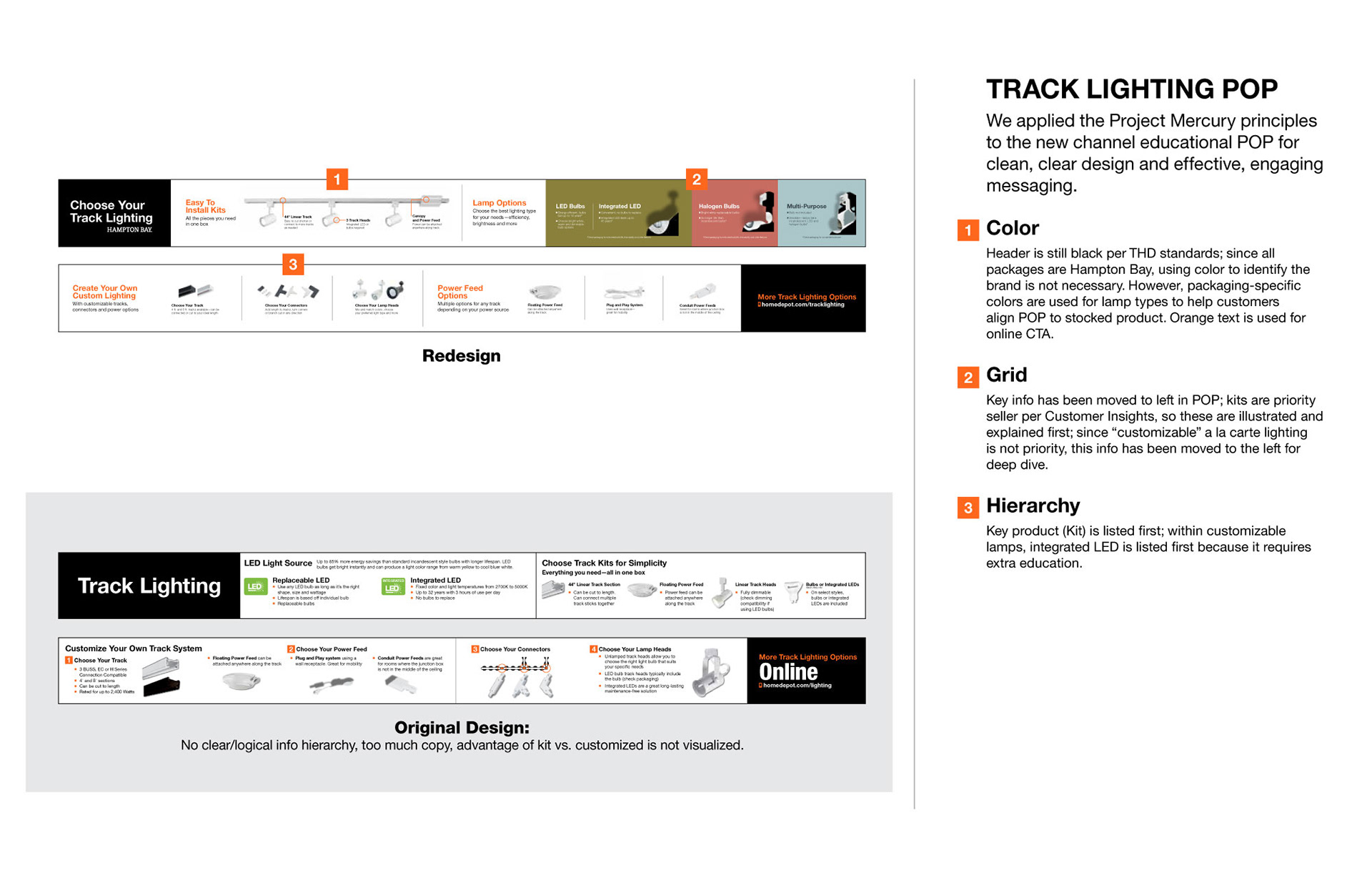
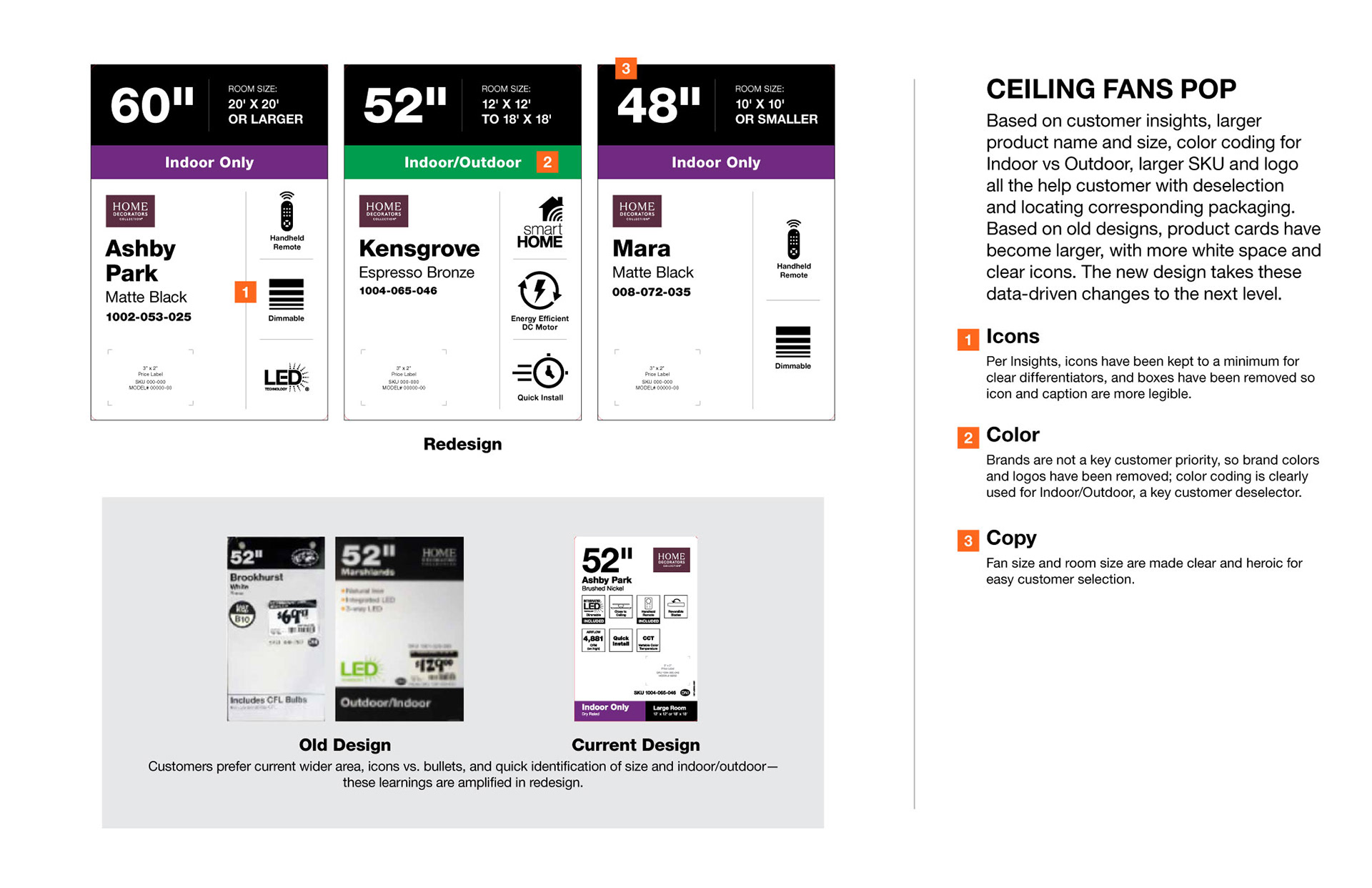
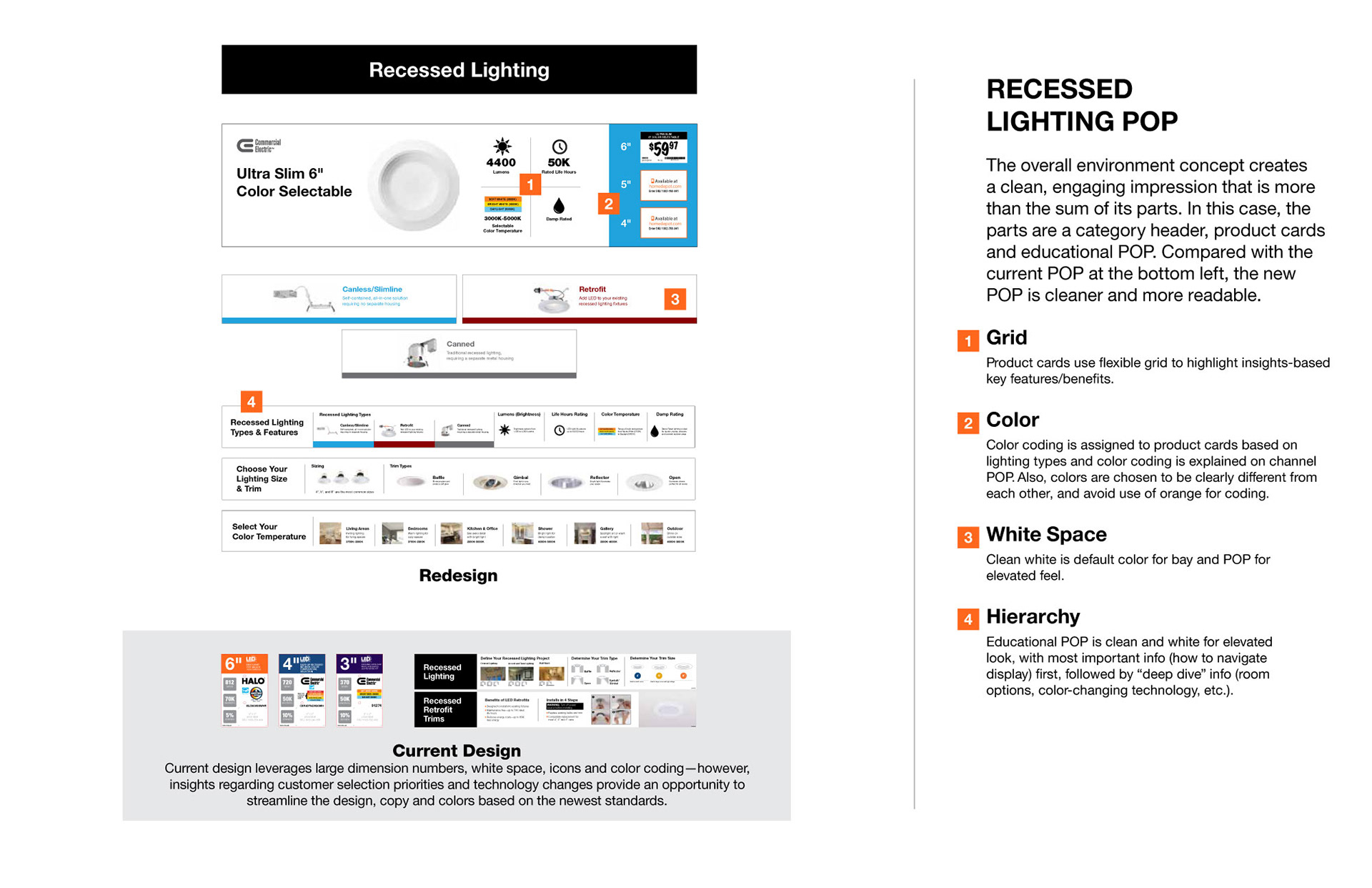
The system we built borrowed logic from responsive digital design, modular components that scale and adapt across product categories and sign formats the way a well-built web layout adapts across screen sizes. It was, as far as I know, one of the first times that thinking had been deliberately applied to a print retail environment at this scale. We also demanded that Home Depot's Digital and Insights own customer research be the basis of this design system. The top three reasons to buy or not buy this product determined messaging hierarchy, a connection to online for everything else, and a clear path to delivery and installation options where relevant. And we found that outside these points, most other information we had in all product categories on our signage read to customers as noise.
The system we built borrowed logic from responsive digital design, modular components that scale and adapt across product categories and sign formats the way a well-built web layout adapts across screen sizes. It was, as far as I know, one of the first times that thinking had been deliberately applied to a print retail environment at this scale. We also demanded that Home Depot's Digital and Insights own customer research be the basis of this design system. The top three reasons to buy or not buy this product determined messaging hierarchy, a connection to online for everything else, and a clear path to delivery and installation options where relevant. And we found that outside these points, most other information we had in all product categories on our signage read to customers as noise.
The main purpose of the Project Mercury redesign wasn't to talk about products so much as it was supposed to anticipate the customer.
We also had a defense mechanism. Working with the THD in-store leadership, we developed a ten-point best practices document that gave us something to hold up when clients inevitably tried to add back the complexity we'd removed. Design systems without institutional backing don't survive contact with stakeholders. Over the years we've discovered that this one does.
And the system made our own production process faster. Every new project started with a defensible foundation before research even began. Very important at a store run by merchants who at the time had lots of power and often got to make decisions based on their favorite color rather than hard data or respect for the brand.
Project Mercury is a project no longer, and is now fully encoded in Home Depot's Inbay brand standards.
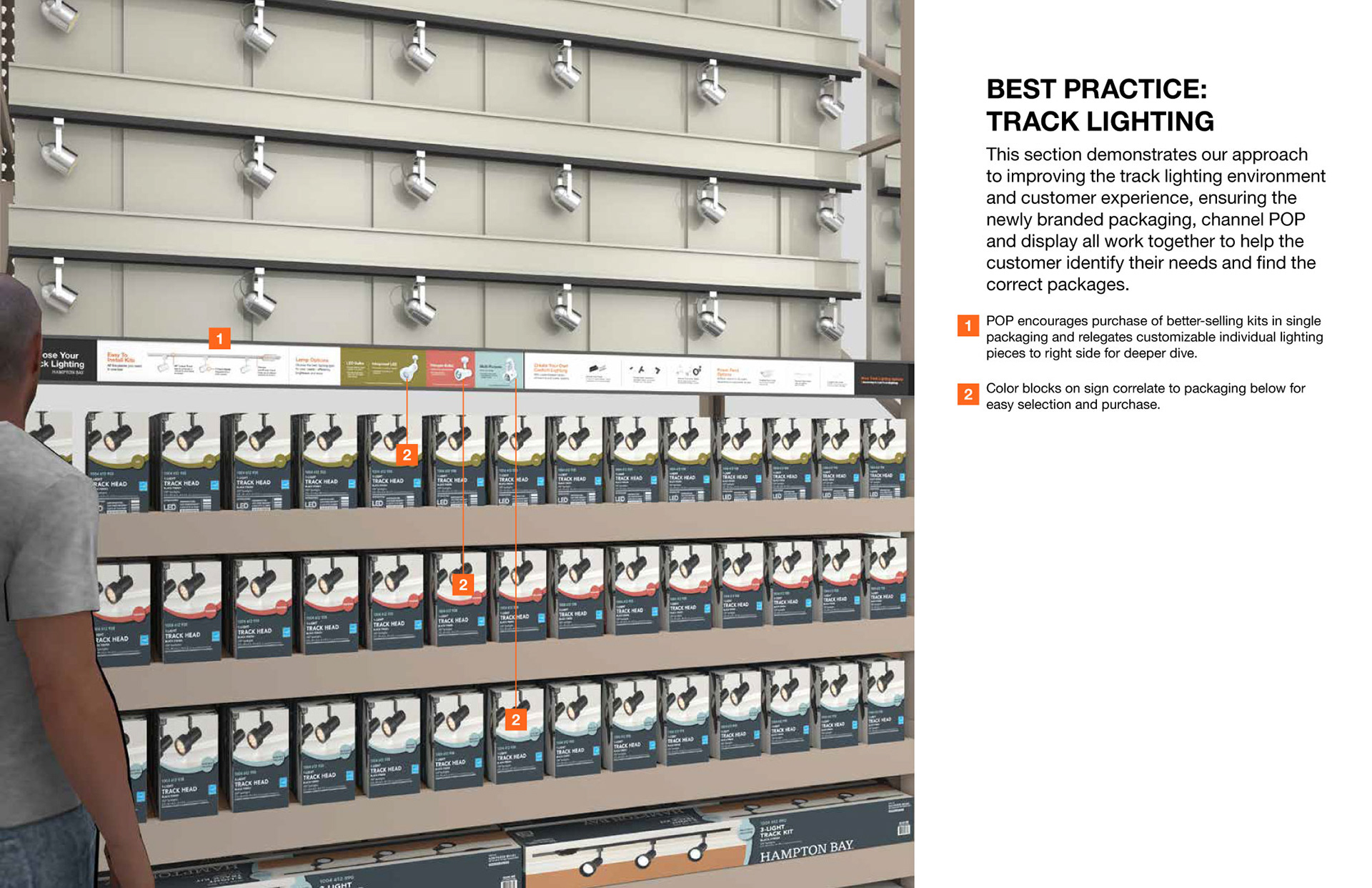
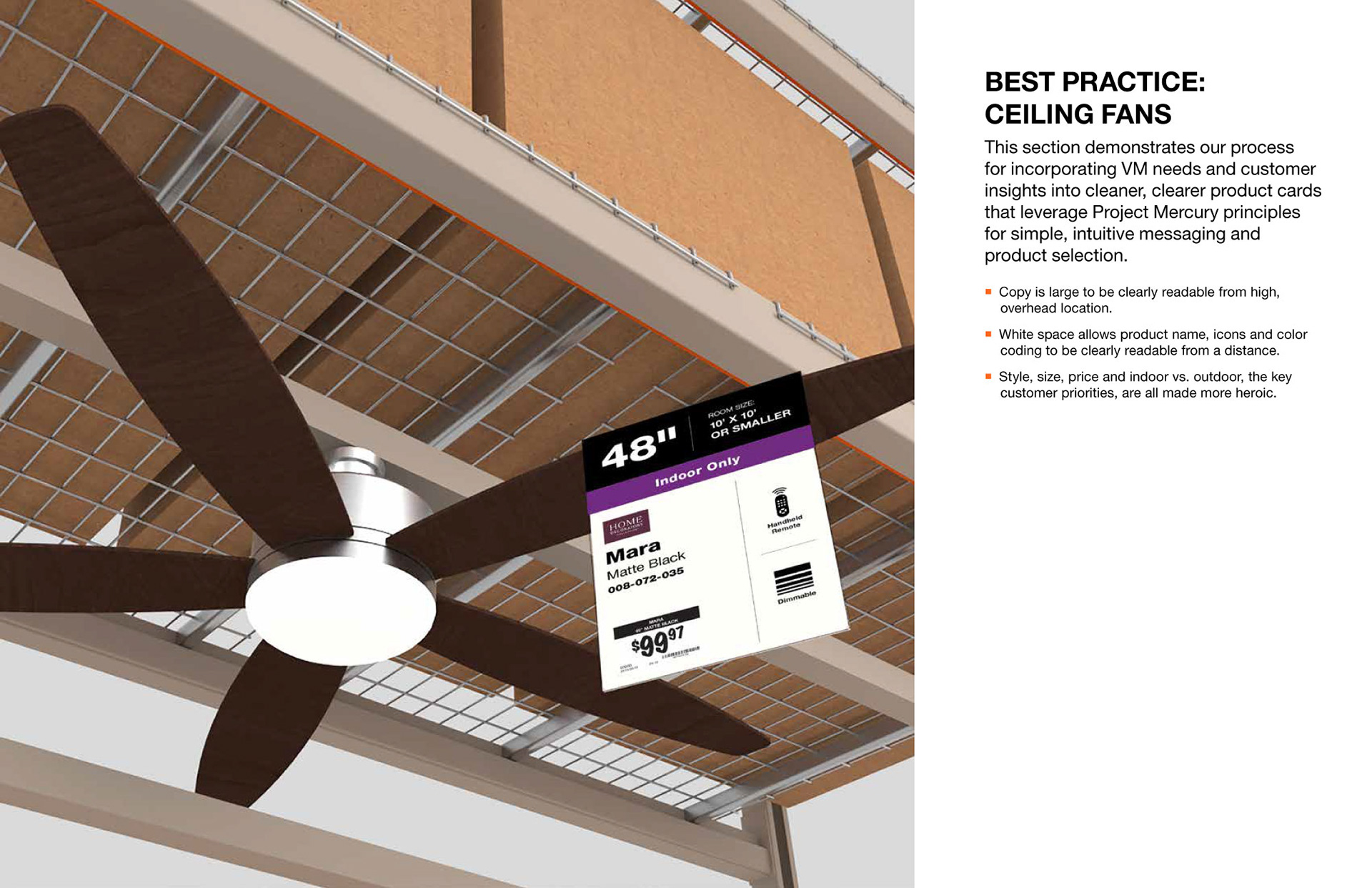
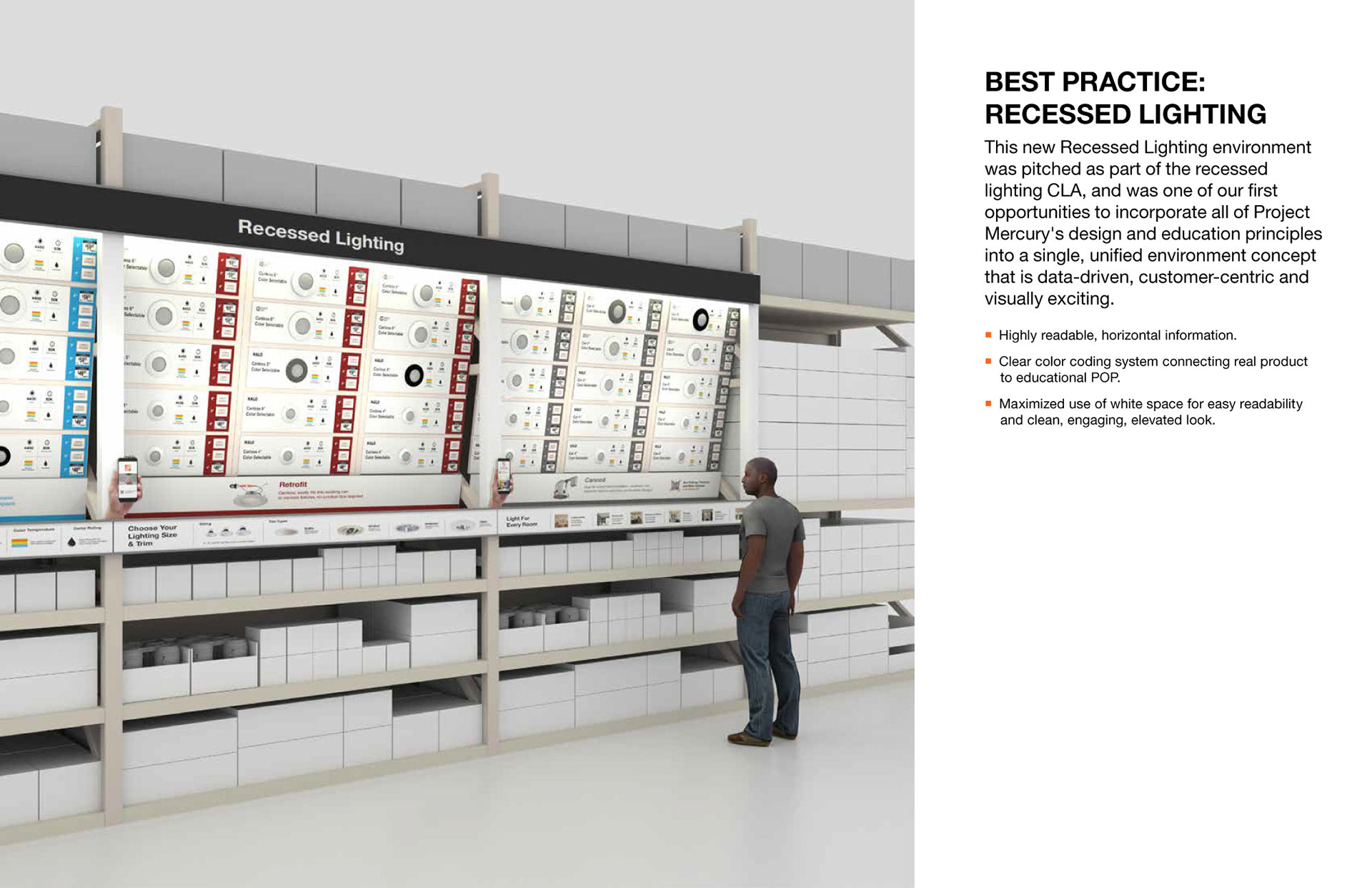
Our best case scenario layout showcasing Project Mercury
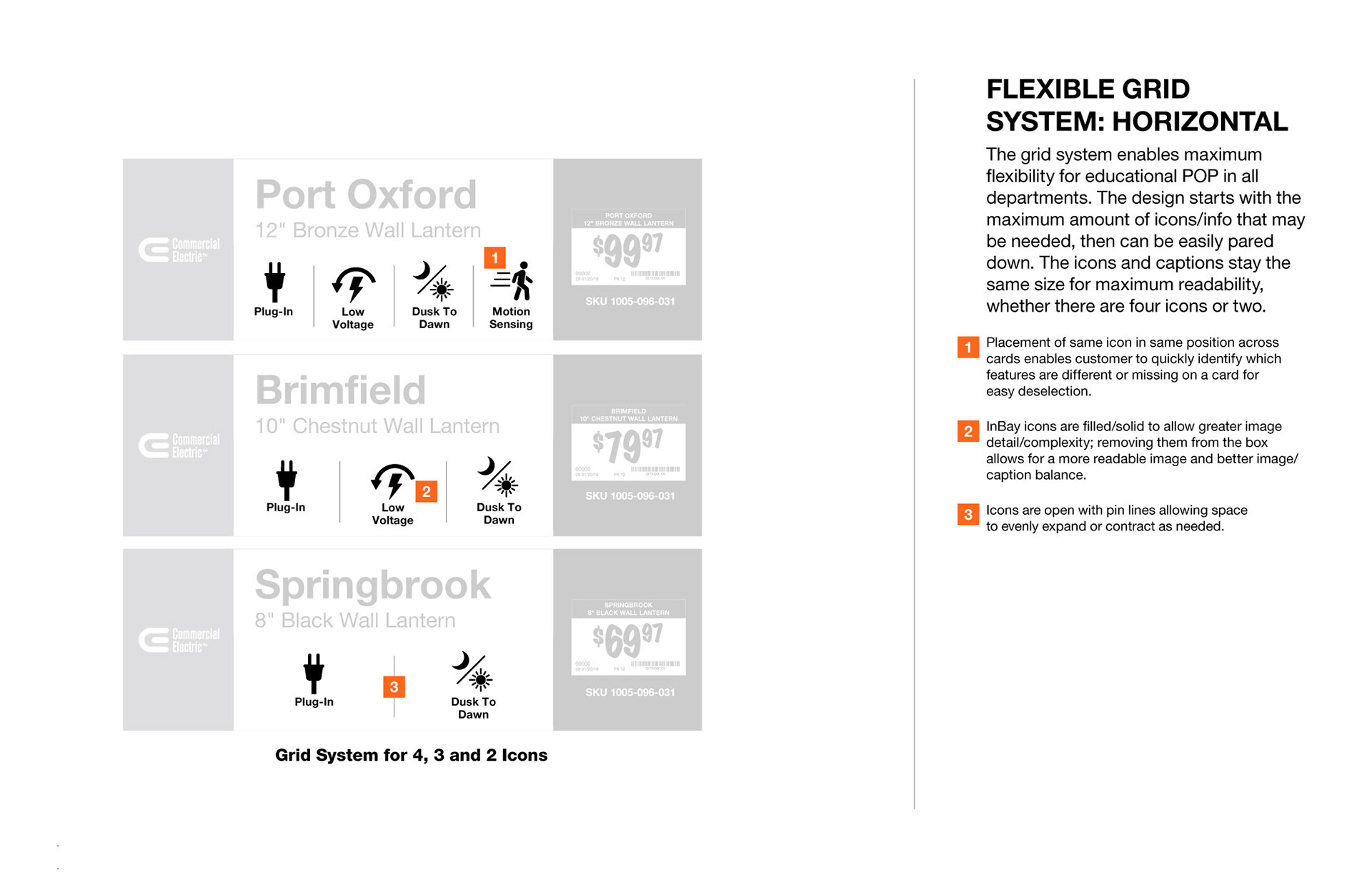
Responsive design, usually utilized in phones and tablets, deployed into a print environment
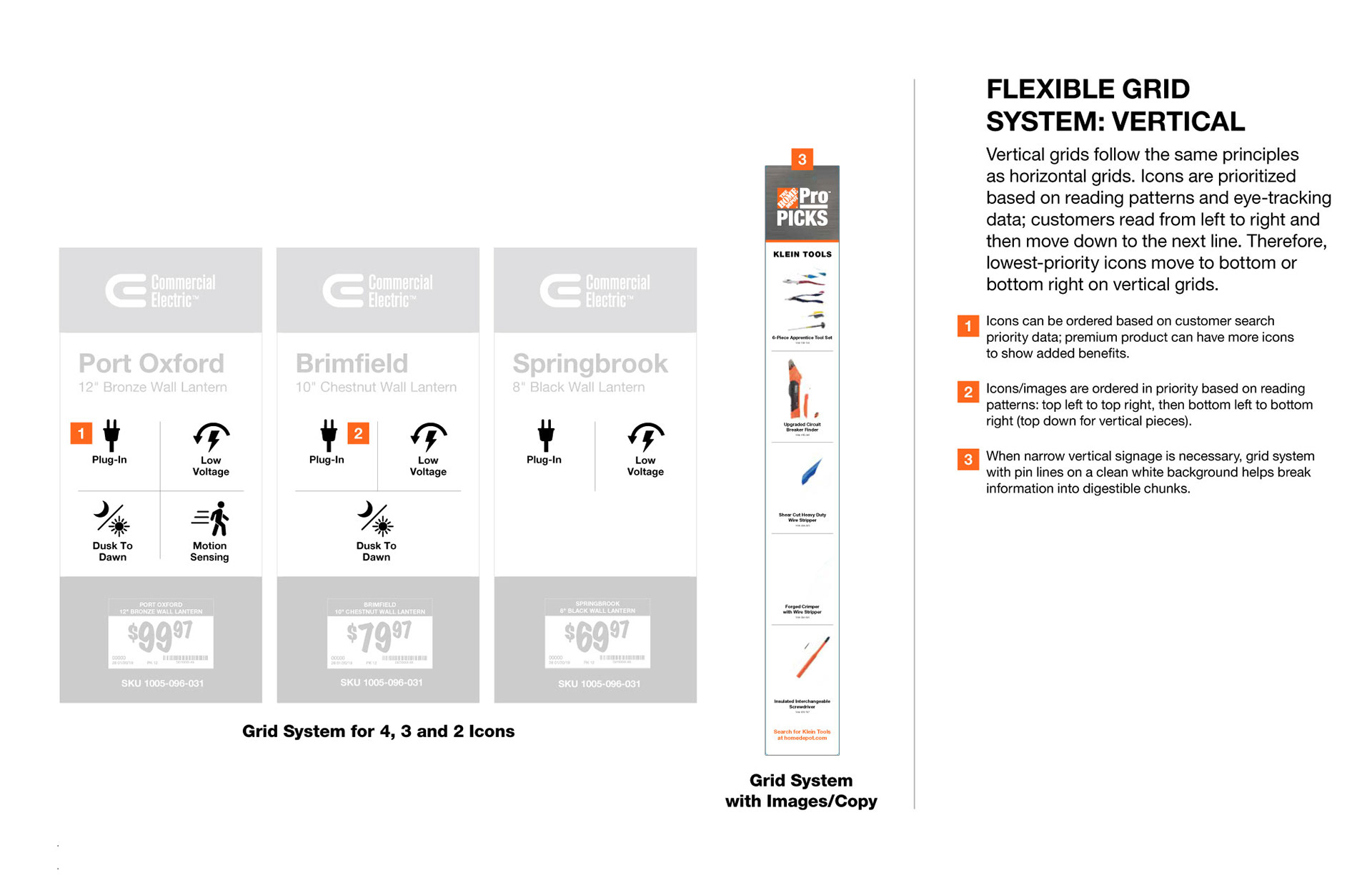
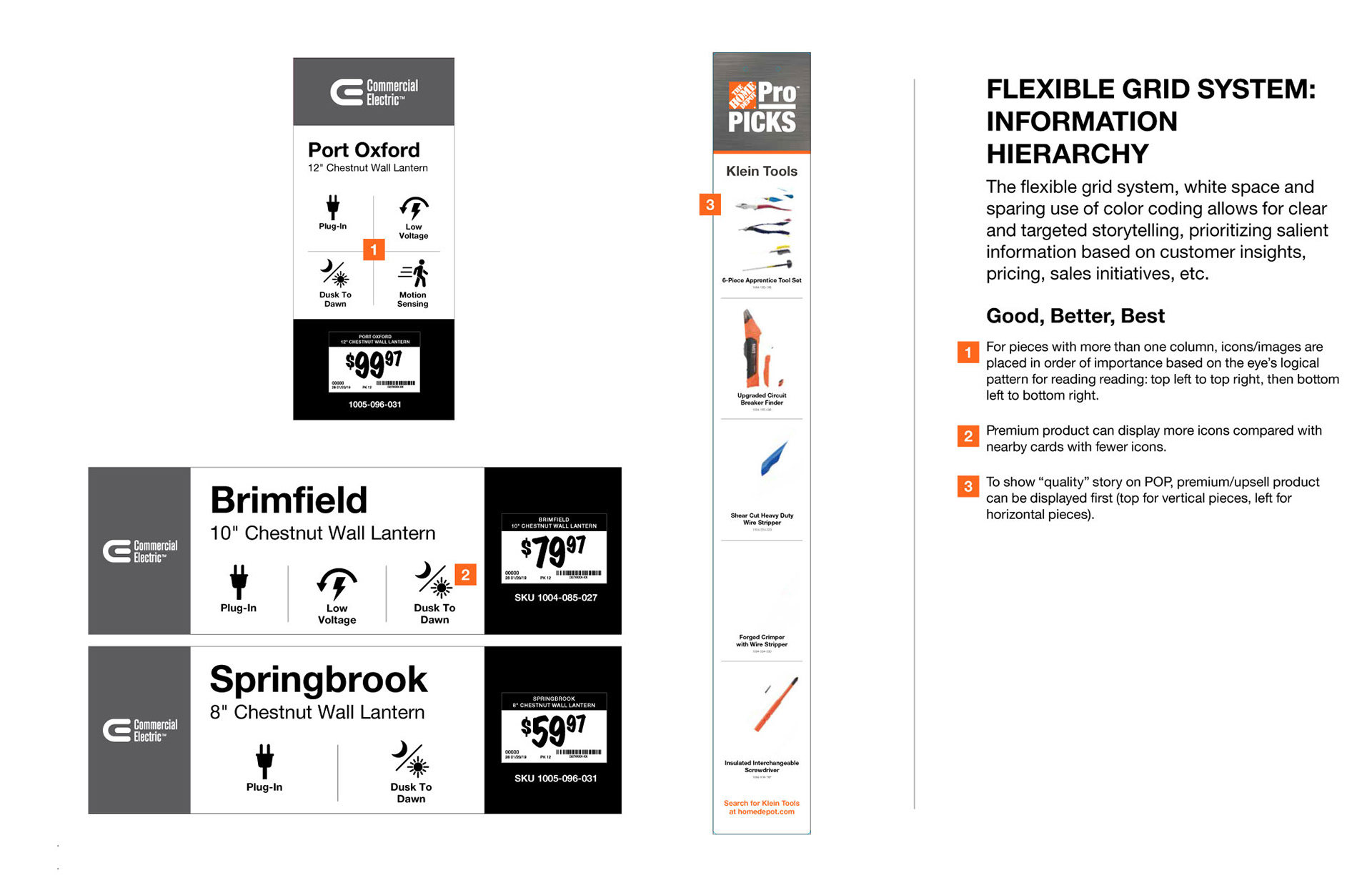
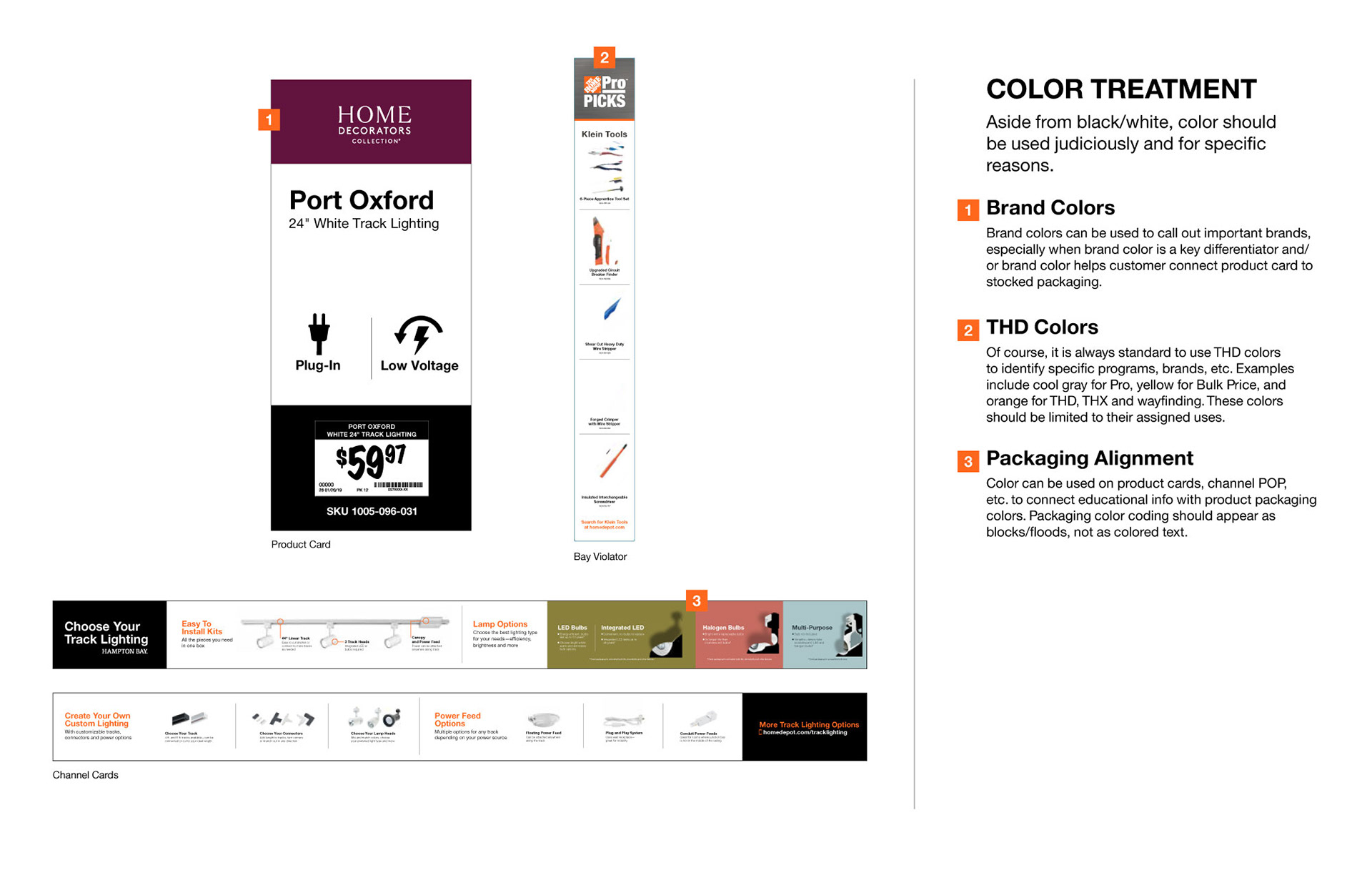
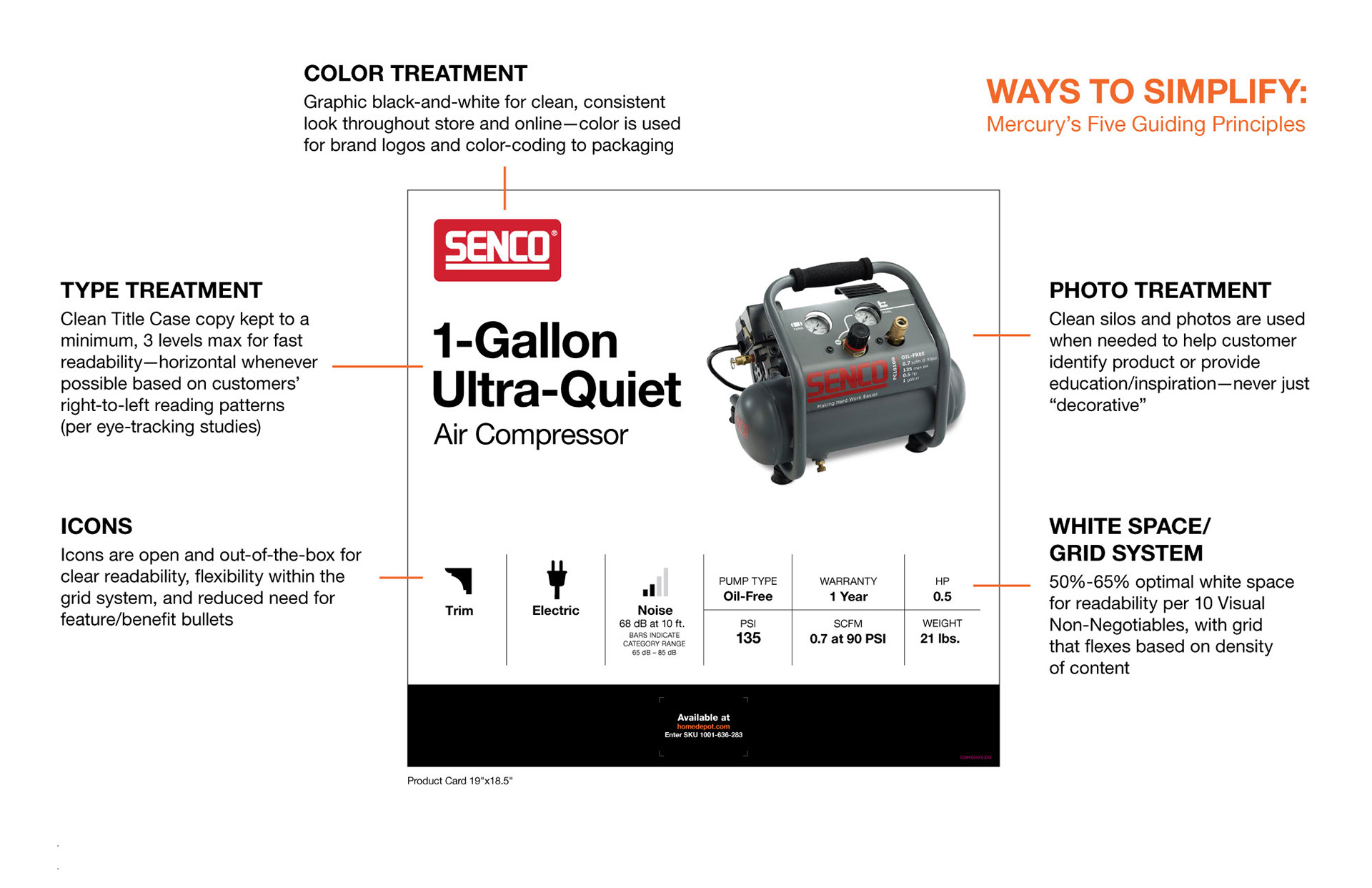
Reducing and reframing color use puts the focus on important messaging in a very cluttered retail environment
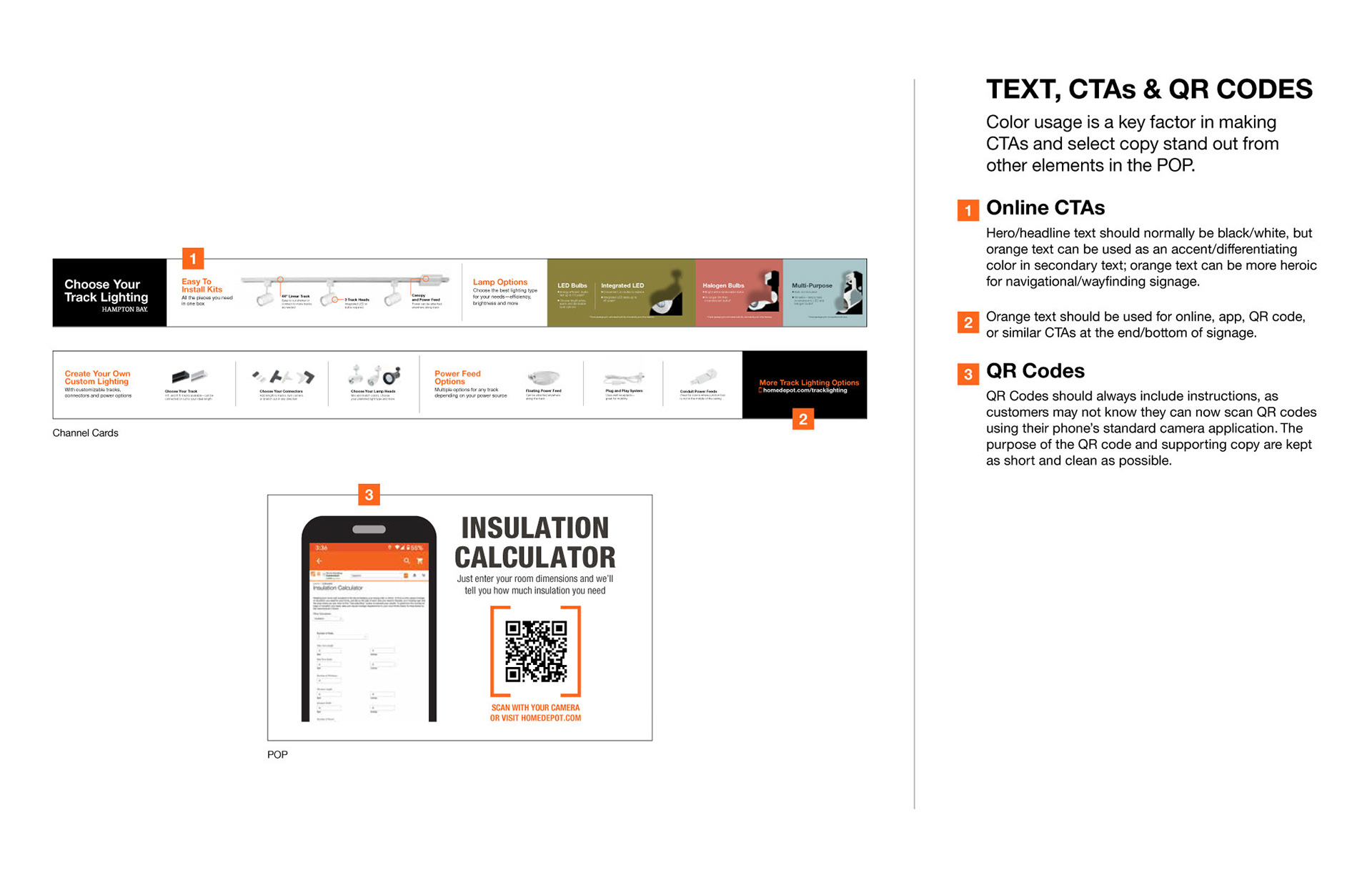
We made a specific choice to deploy the color orange in the store almost always as a navigation tool. Orange is the brand color but it's also the color that represents direct customer assistance. If you see the color orange in a Home Depot store, it is almost always directing you to where you need to go., both on and offline.